
THE MATERIAL THAT HOLDS LIGHT
Porcelain Veneers in the Dominican Republic
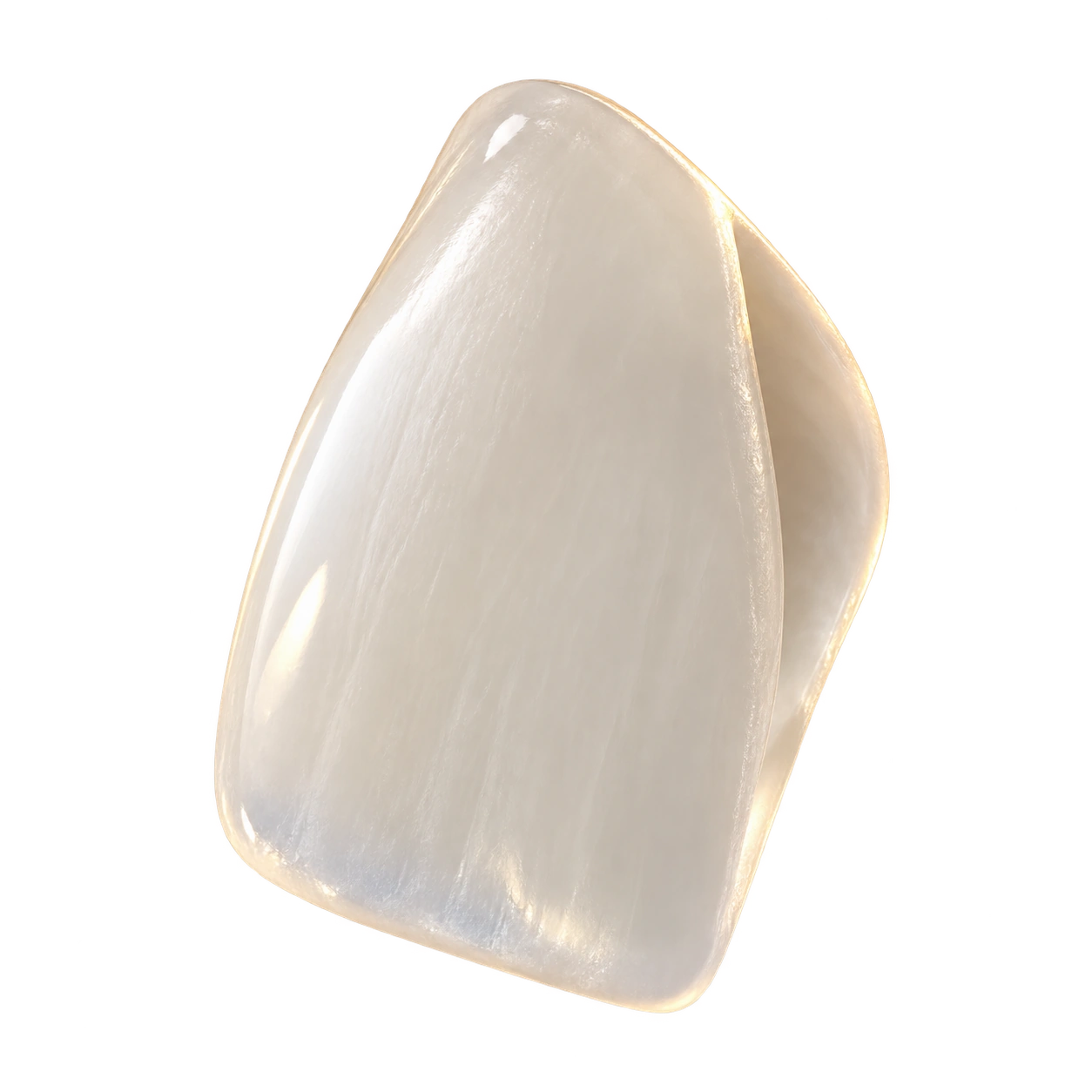
Porcelain is chosen when the goal is a surface that behaves like enamel under changing light rather than one that simply looks white in a photograph.
Free consultationSANTO DOMINGO · DOMINICAN REPUBLIC
THE SURFACE
Why porcelain behaves differently
Dental porcelain is a ceramic, and ceramics transmit light instead of stopping it. That single property is the reason a porcelain restoration can sit beside an untouched natural tooth without announcing itself. Light enters the surface, scatters inside the material and leaves again, which is close to what happens in enamel.
A composite restoration is a resin. Resin is excellent at many things, but it reflects more light from its outer surface and less from within, so it tends to read flatter under strong or angled light. Neither material is better in the abstract. They answer different questions, and which question you are asking is what the consultation is for.
Porcelain also resists surface staining from coffee, wine and tobacco better than resin does over the same period. It is not stain-proof and nothing is, but the polished ceramic surface holds its character longer between visits.
THE DECISIONS
Shade is the easy part
Most people arrive thinking the decision is colour. Colour is the fastest decision to make and the least interesting one. Shape carries far more of the result: the width of each tooth against its neighbour, how the edge catches light, how much of the upper teeth shows when the lip is at rest, and whether the line the teeth draw follows the lower lip when you smile.
Those proportions are personal. A set of dimensions that reads beautifully on one face reads borrowed on another, which is why a plan is built on your face rather than on a catalogue. Photographs, measurements and a conversation about what you actually want come before any material is discussed.
Longevity is discussed as a range, not a promise. Published clinical literature places well-maintained porcelain restorations in the region of ten to fifteen years with proper care, and care means the ordinary things: cleaning, regular review, and protecting the teeth if you grind at night.
From first message to finished smile.
01
Let's connect
Send your goals and a few photographs. You will hear back from the clinic team, not from an automated funnel, and the first conversation costs nothing.
02
Your personal plan
Dr. Collado reviews what you sent and proposes an approach: which teeth, which material, roughly how many visits and what is realistic for your case.
03
Your visit
Travel dates are arranged around the plan. The clinic team confirms what is and is not included for your specific case before you book anything.
04
Afterwards
You leave with instructions and a point of contact. Review appointments are agreed in advance so that follow-up is not left to chance.
Other ways to approach the same result.
YOUR QUESTIONS
Answered plainly.
How many visits does a porcelain case take?
It depends on how many teeth are involved and whether anything needs to be treated first. Dr. Collado gives you a visit count in the consultation, based on your case rather than an average.
Will my veneers look obviously artificial?
That is a question about planning, not about porcelain. Shape and proportion are chosen against your face and your existing teeth, and you see the plan before anything is made.
How long do porcelain veneers last?
Published literature describes a range of roughly ten to fifteen years with proper care. That is a range, not a guarantee, and it depends heavily on maintenance and habits such as night-time grinding.
Can I discuss travel before booking?
Yes. Contact the team to discuss your visit, transportation and accommodation options, and confirm what is included in your specific plan.
YOUR NEXT STEP